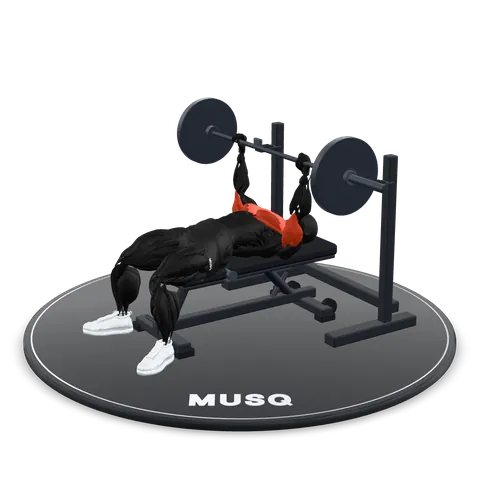
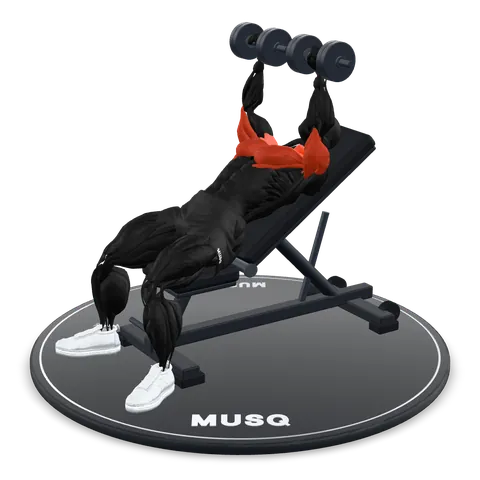
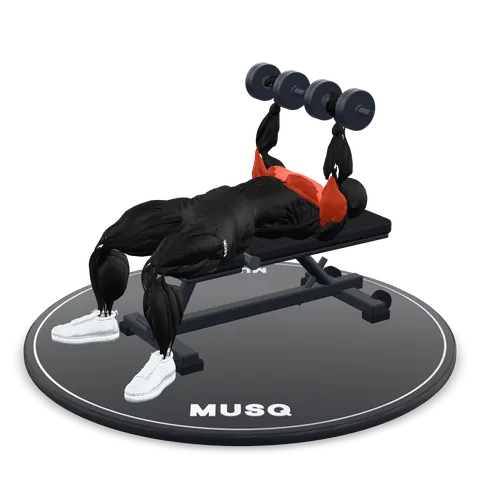
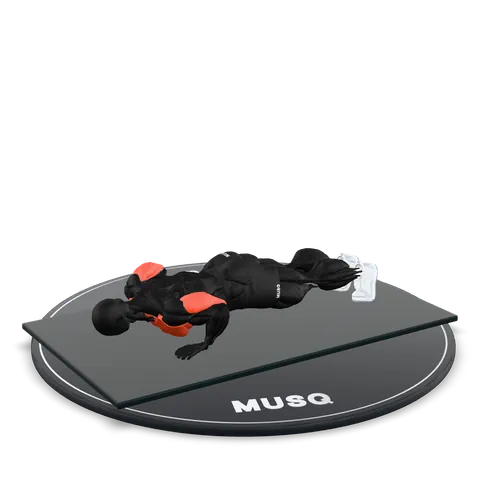
Chest · Cable · Intermediate
Cable Fly
The cable fly isolates the chest by sweeping your arms together against cable tension. Unlike dumbbells, the cables keep the pecs loaded through the whole arc, including the squeeze where your hands meet.
- Primary muscles
- Middle Pectoralis
- Equipment
- Cable
- Level
- Intermediate
- Sets × reps
- 3 × 10–15
- Rest
- 60–90 s
Muscles worked
Estimated activation, matching the orange paint on the 3D model.
- Middle Pectoralisprimary
- Lower Pectoralissecondary
- Upper Pectoralissecondary
- Anterior Deltoidsecondary
- Biceps Brachiisecondary
How to do the cable fly
- Set both pulleys at about shoulder height and take a handle in each hand.
- Step forward into a staggered stance with your chest up and shoulder blades back.
- Set a slight bend in your elbows and keep that same angle through the whole rep.
- Sweep your hands together in a wide arc, as if hugging a large barrel, until they meet in front of your sternum.
- Squeeze for a moment, then let your arms open slowly until you feel a stretch across the chest.
Form cues and common mistakes
The same coaching points MUSQ shows on the lifter in the app.
Scapular Position
Constant cable tension makes it easy to let the shoulders round forward.
Why it mattersKeeping the chest lifted and shoulder blades back stabilises the joint through a movement with tension in every position.
Common mistakeShoulders rolling forward as the cables pull the arms back at the start.
Do this insteadSet the chest up and shoulder blades back before taking the first step into the stance.
Elbow Position
The elbow angle should barely move for the whole set.
Why it mattersA fixed, slight bend keeps the work in the shoulder joint and on the chest instead of turning the move into a press.
Common mistakeBending the elbows more as the cables come together, quietly pressing instead of flying.
Do this insteadSet a slight elbow bend at the start and hold that same angle through the whole rep.
Hand Path
Where the hands meet decides which fibres of the chest do the most work.
Why it mattersBringing the hands together in front of the sternum keeps the tension on the mid chest.
Common mistakeHands meeting too high or too low, which drifts the target to the shoulder or lower chest.
Do this insteadSweep the hands together directly in front of the sternum.
Fly Arc
The cue that keeps a cable fly a fly.
Why it mattersThinking 'hug a barrel' keeps the movement happening at the shoulder joint instead of the elbow.
Common mistakeElbows driving forward like a press instead of the arms sweeping through an arc.
Do this insteadImagine hugging a large barrel and sweep the arms through that arc.
Stance
Constant cable pull needs a braced base to work against.
Why it mattersA split stance with a soft front knee resists the backward pull of the cables and keeps the torso still.
Common mistakeStanding square with locked knees, so the cables pull the body back toward the stacks mid-rep.
Do this insteadStagger the feet, soften the front knee, and brace before starting the set.
● Coming soon to iPhone
Train every lift in 3D with MUSQ
Nearly 500 exercises in 3D, x-ray set-up demos, stretching and a plan built around the days you train. MUSQ is coming soon to iPhone.
Cable Fly FAQ
Cable fly or dumbbell fly?
Cables keep tension on the chest at the top of the movement, where dumbbells go slack, and make it easy to change the angle. Dumbbells load the stretched position harder.
What pulley height should I use?
Shoulder height works the middle of the chest. Setting the pulleys low and sweeping upward shifts more work to the upper chest.
Should my arms be straight on cable flys?
Keep a slight, constant bend. Locked elbows strain the joint, and bending more as you go turns the fly into a press.